Roles in AIML
Different Roles in AIML Domain
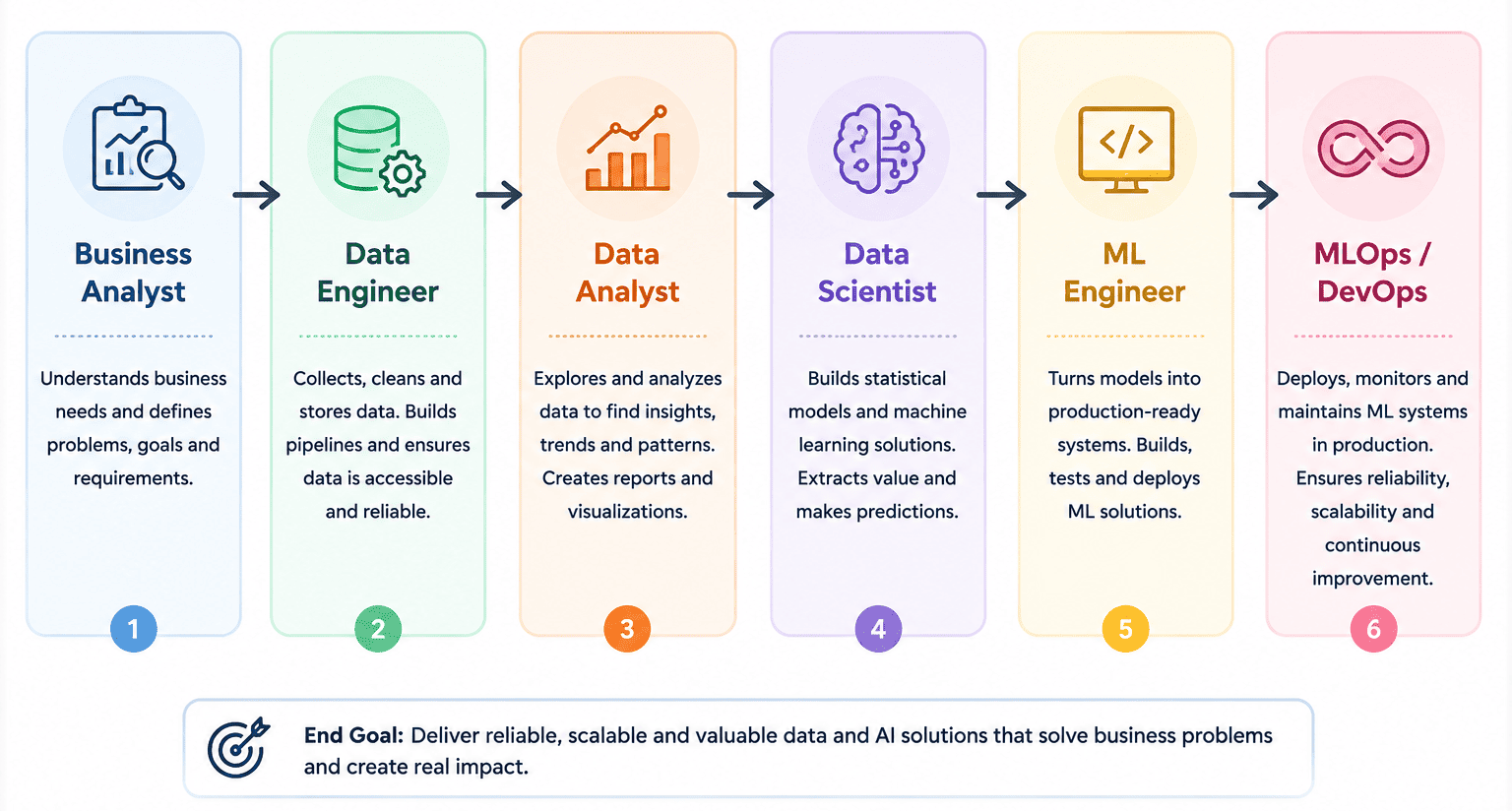
Different Roles in Machine Learning Pipeline
1. Business Analyst (BA)
A Business Analyst connects the business team and the technical team.
They understand business problems and convert them into technical requirements.
They focus more on:
- Business goals
- Requirement gathering
- Communication
- Documentation
- Process analysis
They usually do less coding.
What They Understand
- What problem the company is facing
- What solution is required
- What the business expects
- What success looks like
- What data is available
Example
Company Problem
Customers are leaving the platform.
Business Analyst Asks
- Why are customers leaving?
- What data do we have?
- Can AI predict customer churn?
- What should be the business goal?
- How will success be measured?
Expertise
- Business understanding
- Requirement analysis
- Process mapping
- Communication
- Documentation
- Stakeholder management
Skills
Technical Skills
- Excel
- SQL basics
- Power BI
- Tableau
- Documentation tools
Non-Technical Skills
- Communication
- Presentation
- Critical thinking
- Problem solving
- Team coordination
2. Data Analyst
A Data Analyst studies data and finds useful insights.
They help companies understand what is happening in the business.
They mainly work on:
- Reports
- Dashboards
- Trends
- Visualizations
- Business insights
They answer:
“What is happening in the business?”
What They Analyze
- Sales performance
- Customer behavior
- Profit trends
- Business growth
- Product performance
Example
Business Questions
- Which product sells the most?
- Which city gives maximum profit?
- Why did sales decrease?
- Which customers buy frequently?
Data Analyst Creates
- Charts
- Dashboards
- Reports
- KPI (Key Performance Indicator) summaries
Expertise
- Data visualization
- Reporting
- Statistical analysis
- Trend analysis
- KPI analysis
Skills
Technical Skills
- SQL
- Excel
- Power BI
- Tableau
- Python basics
- R basics
- Statistics
Non-Technical Skills
- Analytical thinking
- Communication
- Reporting
- Attention to detail
3. Data Engineer
A Data Engineer builds systems for collecting, storing, and processing data.
They create the data infrastructure used by analysts and scientists.
They mainly work on:
- Data pipelines
- Data storage
- Big data systems
- Data processing
- Cloud platforms
They answer:
“How do we handle huge amounts of data efficiently?”
What They Build
- ETL pipelines
- Data warehouses
- Data lakes
- Streaming systems
- Cloud data systems
They help to maintain the Data Flow through
Website → API → Kafka → Spark → Data Warehouse
Data Engineer Tasks
- Collect data from APIs
- Move data automatically
- Store large datasets
- Process real-time data
Expertise
- Databases
- Distributed systems
- Big data technologies
- Data warehousing
- Cloud computing
Skills
Technical Skills
- SQL
- Python
- Spark
- Hadoop
- Kafka
- Airflow
- AWS
- GCP
- Azure
Non-Technical Skills
- Problem solving
- System thinking
- Optimization
- Team collaboration
Important Concepts
- ETL → Extract, Transform, Load
- ELT → Extract, Load, Transform
- AWS → Amazon Web Services
- GCP → Google Cloud Platform
4. Data Scientist
A Data Scientist builds intelligent systems using Machine Learning and statistics.
They create models that can predict, classify, recommend, and analyze data.
They answer:
“What will happen in the future?”
What They Build
- Prediction models
- Recommendation systems
- Fraud detection systems
- Forecasting systems
- AI applications
Example Applications
- Fraud detection
- Medical diagnosis
- Stock prediction
- Customer recommendation
Data Scientist Tasks
- Analyze data
- Train ML models
- Evaluate performance
- Improve accuracy
Expertise
- Machine Learning
- Statistics
- Mathematics
- AI algorithms
- Data analysis
Skills
Technical Skills
- Python
- R
- SQL
- Scikit-learn
- TensorFlow
- PyTorch
Non-Technical Skills
- Critical thinking
- Research mindset
- Problem solving
- Communication
Important Concepts
- Regression
- Classification
- Clustering
- Deep Learning
- Feature Engineering
5. ML Engineer (Machine Learning Engineer)
An ML Engineer converts ML models into real applications.
They make models scalable, fast, and usable in production.
They mainly focus on:
- Deployment
- APIs
- Optimization
- Scalability
- Reliability
They answer:
“How do we use ML models in real systems?”
What They Build
- Prediction APIs
- ML applications
- Model serving systems
- Automated pipelines
Example Application Flow
Mobile App → API → ML Model → Prediction
ML Engineer Tasks
- Deploy trained models
- Create APIs
- Optimize speed
- Improve reliability
Expertise
- Software engineering
- ML deployment
- API development
- Cloud deployment
- Optimization
Skills
Technical Skills
- Python
- Flask
- FastAPI
- Docker
- Kubernetes
- CI/CD
- Cloud deployment
Important Concepts
- Model serving
- Containerization
- API integration
- Deployment pipelines
Non-Technical Skills
- Problem solving
- System design
- Collaboration
- Debugging
6. DevOps Engineer
A DevOps Engineer manages infrastructure, deployment, and automation.
They ensure software systems run smoothly and reliably.
They mainly focus on:
- Automation
- Deployment
- Servers
- Infrastructure
- Monitoring
They answer:
“How do we deploy and maintain systems efficiently?”
What They Manage
- Servers
- Deployment pipelines
- Infrastructure
- Cloud platforms
- Automation systems
Example Automated Flow
Code Push → Testing → Deployment
DevOps Tasks
- Automate deployments
- Manage servers
- Monitor applications
- Maintain cloud systems
Expertise
- Cloud infrastructure
- Automation
- Linux systems
- Deployment pipelines
Skills
Technical Skills
- Linux
- Docker
- Kubernetes
- Jenkins
- GitHub Actions
- AWS
- Azure
- GCP
Important Concepts
- Infrastructure automation
- Containerization
- Continuous deployment
Non-Technical Skills
- Troubleshooting
- Team collaboration
- Monitoring
- System management
7. MLOps Engineer
An MLOps (Machine Learning Operations) Engineer manages Machine Learning systems after deployment.
They automate ML workflows and monitor model performance.
They combine:
- Machine Learning
- DevOps
- Automation
They answer:
“Is the ML model still performing correctly?”
What They Monitor
- Model accuracy
- Data drift
- Pipeline failures
- Retraining processes
- Experiment tracking
Example MLOps Tasks
- Detect accuracy drop
- Retrain models automatically
- Monitor prediction quality
- Track ML experiments
Expertise
- ML lifecycle automation
- Monitoring systems
- Production ML systems
- Pipeline management
Skills
Technical Skills
- MLflow
- Kubeflow
- Docker
- Kubernetes
- CI/CD
- Cloud ML tools
Non-Technical Skills
- Automation thinking
- Monitoring
- Debugging
- Collaboration
Important Concepts
- Model monitoring
- Retraining pipelines
- Experiment tracking
8. Database Administrator (DBA)
A DBA manages and maintains databases.
They ensure databases are secure, fast, and reliable.
They mainly focus on:
- Database performance
- Security
- Backup
- Recovery
- Access control
They answer:
“How do we keep databases secure and efficient?”
What They Manage
- Database servers
- User permissions
- Backups
- Replication
- Database security
Example DBA Tasks
- Optimize database queries
- Create backups
- Recover lost data
- Manage user access
Expertise
- Database optimization
- Query tuning
- Security management
- Backup systems
Skills
Technical Skills
- MySQL
- PostgreSQL
- Oracle
- MongoDB
Non-Technical Skills
- Attention to detail
- Monitoring
- Problem solving
- Reliability management
Important Concepts
- Indexing
- Replication
- Backup
- Recovery
- Security