What is AI, ML, DL....
Introduction to AI, ML, DL and Related Technologies
1. Artificial Intelligence (AI)
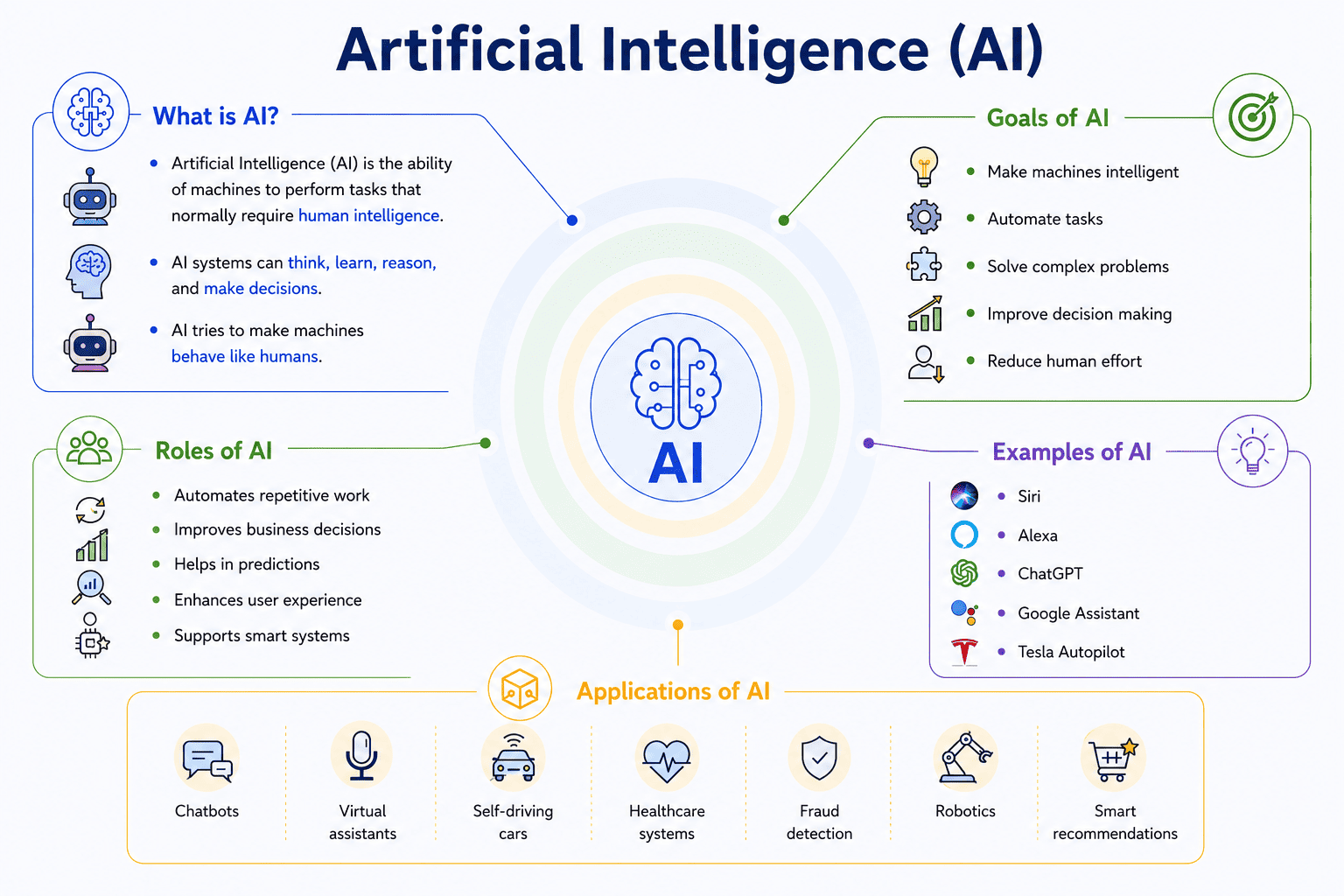
What is AI?
Artificial Intelligence (AI) is the ability of machines to perform tasks that normally require human intelligence.
AI systems can learn, reason, and make decisions.
AI aims to make machines behave intelligently.
Artificial Intelligence (AI) enables machines to learn, reason, and perform tasks that normally require human intelligence.
Goals of AI
- Make machines intelligent by enabling them to learn and solve problems.
- Automate tasks to reduce manual work.
- Solve complex problems using data and algorithms.
- Improve decision-making through intelligent analysis.
- Reduce human effort and increase efficiency.
Roles of AI
- Automates repetitive tasks such as data entry and report generation.
- Improves business decisions by analyzing large amounts of data.
- Helps in predictions such as sales forecasting and weather prediction.
- Enhances user experience through personalization and recommendations.
- Supports smart systems like smart homes and intelligent devices.
Applications of AI
- Chatbots provide automated customer support.
- Virtual assistants help users perform tasks using voice commands.
- Self-driving cars assist with autonomous navigation and driving.
- Healthcare systems support disease diagnosis and treatment planning.
- Fraud detection systems identify suspicious financial activities.
- Robotics enables machines to perform automated tasks.
- Recommendation systems suggest products, movies, and content.
Examples of AI
- Siri – Voice-based virtual assistant by Apple.
- Alexa – Smart assistant developed by Amazon.
- ChatGPT – AI chatbot for conversations and content generation.
- Google Assistant – AI assistant for search and task management.
- Tesla Autopilot – AI-powered driving assistance system.
2. Machine Learning (ML)
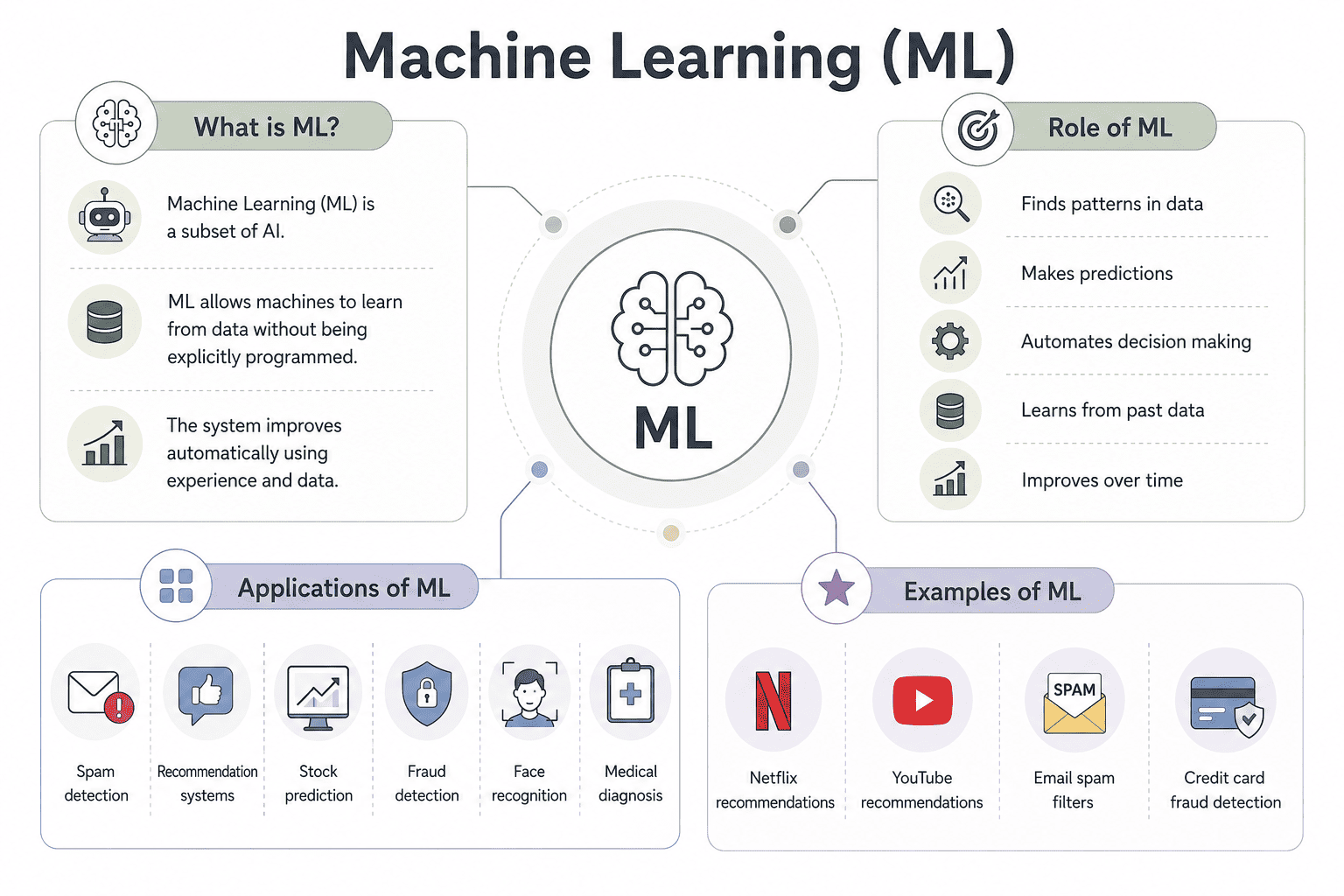
What is Machine Learning (ML)?
Machine Learning (ML) is a subset of Artificial Intelligence (AI).
ML enables machines to learn from data without being explicitly programmed.
ML systems improve their performance automatically through experience and data.
Machine Learning (ML) is a branch of AI that enables computers to learn from data and improve their performance without explicit programming.
Roles of ML
- Finds patterns in data to discover useful insights.
- Makes predictions based on historical data.
- Automates decision-making with minimal human intervention.
- Learns from past data to improve future performance.
- Improves over time as more data becomes available.
Applications of ML
- Spam detection systems identify unwanted emails automatically.
- Recommendation systems suggest relevant products, movies, or content.
- Stock prediction models forecast market trends and prices.
- Fraud detection systems identify suspicious transactions and activities.
- Face recognition systems identify and verify individuals from images.
- Medical diagnosis systems assist doctors in detecting diseases.
Examples of ML
- Netflix recommendations suggest movies and shows based on viewing history.
- YouTube recommendations suggest videos based on user interests.
- Email spam filters automatically classify emails as spam or legitimate.
- Credit card fraud detection systems identify unusual transaction patterns.
3. Deep Learning (DL)
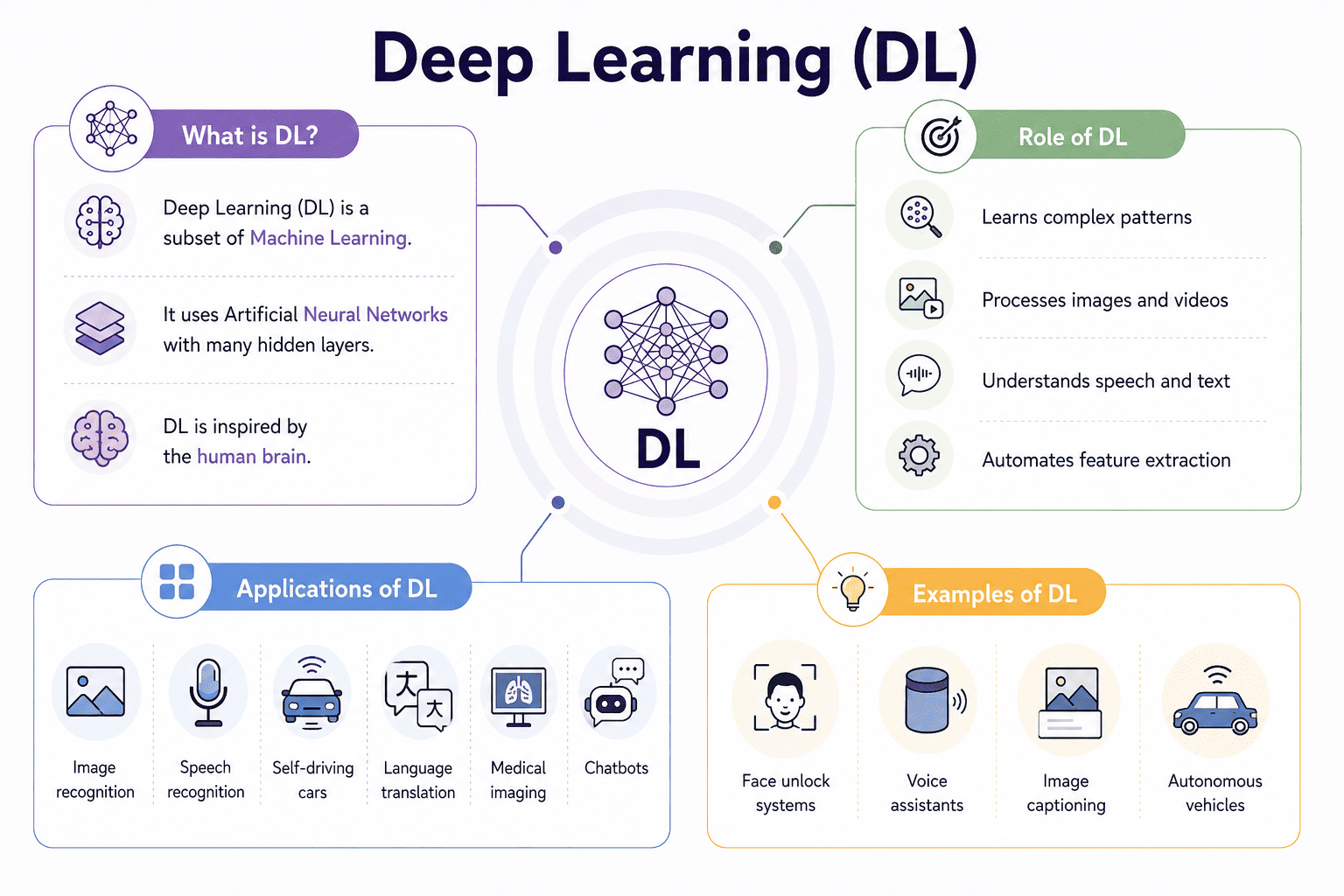
What is Deep Learning (DL)?
Deep Learning (DL) is a subset of Machine Learning (ML).
DL uses Artificial Neural Networks with multiple hidden layers.
DL is inspired by the structure and functioning of the human brain.
Deep Learning (DL) is a branch of Machine Learning that uses multi-layered neural networks to learn complex patterns from large amounts of data.
Roles of DL
- Learns complex patterns from large amounts of data.
- Processes images and videos for recognition and analysis.
- Understands speech and text for communication and language tasks.
- Automates feature extraction without manual intervention.
- Improves accuracy in complex prediction tasks.
Applications of DL
- Image recognition systems identify objects, faces, and scenes in images.
- Speech recognition systems convert spoken language into text.
- Self-driving cars use deep learning for navigation and object detection.
- Language translation systems translate text between different languages.
- Medical imaging systems assist in detecting diseases from scans and X-rays.
- Chatbots and virtual assistants understand and respond to user queries.
Examples of DL
- Face unlock systems recognize users using facial features.
- Voice assistants understand and respond to voice commands.
- Image captioning systems automatically generate descriptions for images.
- Autonomous vehicles use deep learning to perceive and navigate their surroundings.
4. Data Science
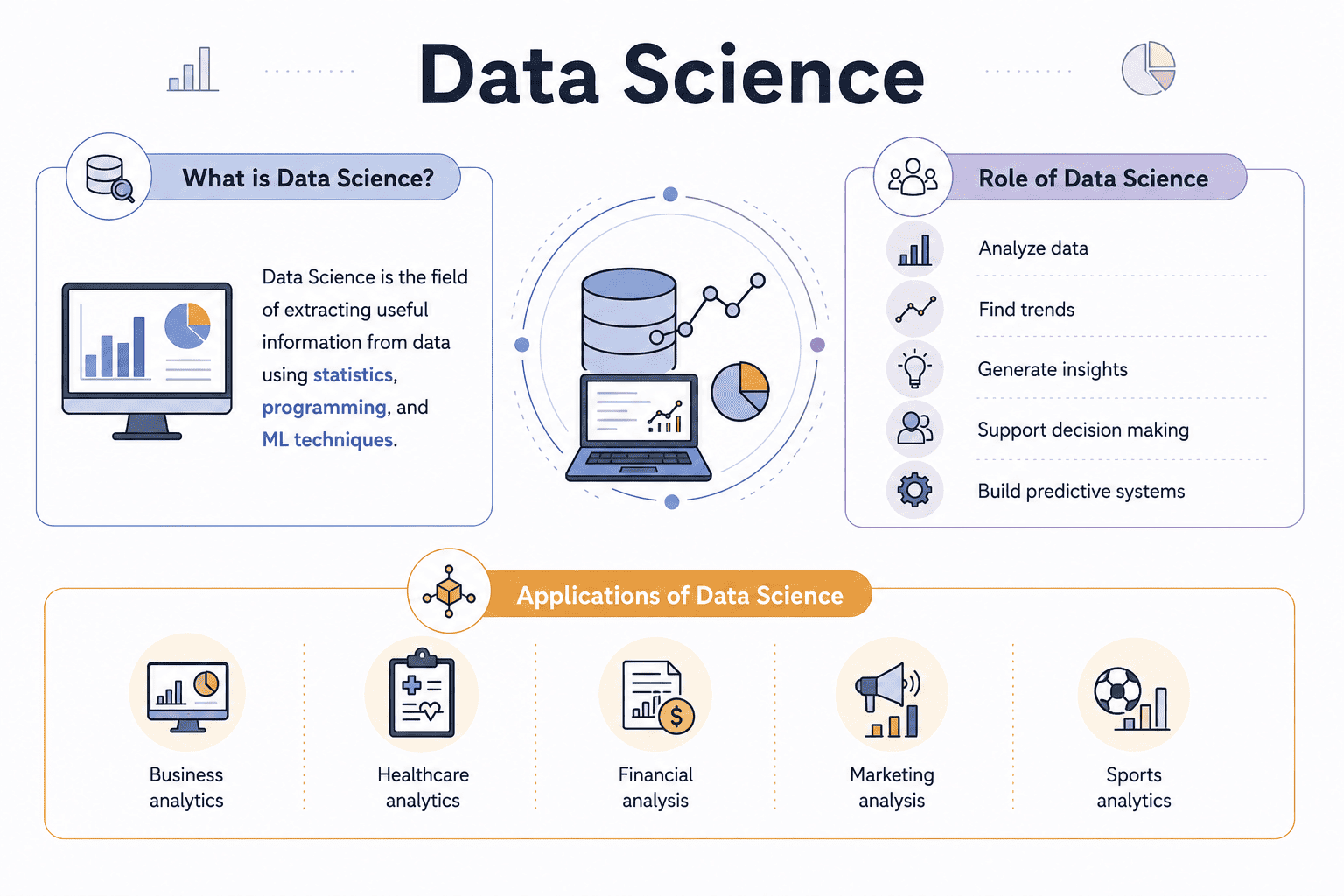
What is Data Science?
Data Science is the field of extracting useful information and knowledge from data.
It combines statistics, programming, machine learning, and domain expertise to solve real-world problems.
Data Science helps organizations make informed decisions using data-driven insights.
Data Science is the discipline of collecting, analyzing, and interpreting data to extract insights and support decision-making.
Roles of Data Science
- Analyzes data to discover useful information.
- Finds trends and patterns hidden within large datasets.
- Generates insights to support business and research goals.
- Supports decision-making through data-driven analysis.
- Builds predictive systems to forecast future outcomes.
- Transforms raw data into meaningful information.
- Visualizes data to communicate findings effectively.
Applications of Data Science
- Business analytics helps organizations improve performance and profitability.
- Healthcare analytics supports disease prediction and patient care.
- Financial analysis assists in risk assessment and investment decisions.
- Marketing analytics helps understand customer behavior and campaign performance.
- Sports analytics improves player performance and team strategies.
- E-commerce analytics enables personalized recommendations and sales forecasting.
- Social media analytics helps analyze user engagement and trends.
Examples of Data Science
- Sales forecasting for businesses.
- Customer segmentation in marketing.
- Disease prediction in healthcare.
- Fraud detection in banking systems.
- Product recommendation systems in online shopping.
- Player performance analysis in sports.
5. Natural Language Processing (NLP)
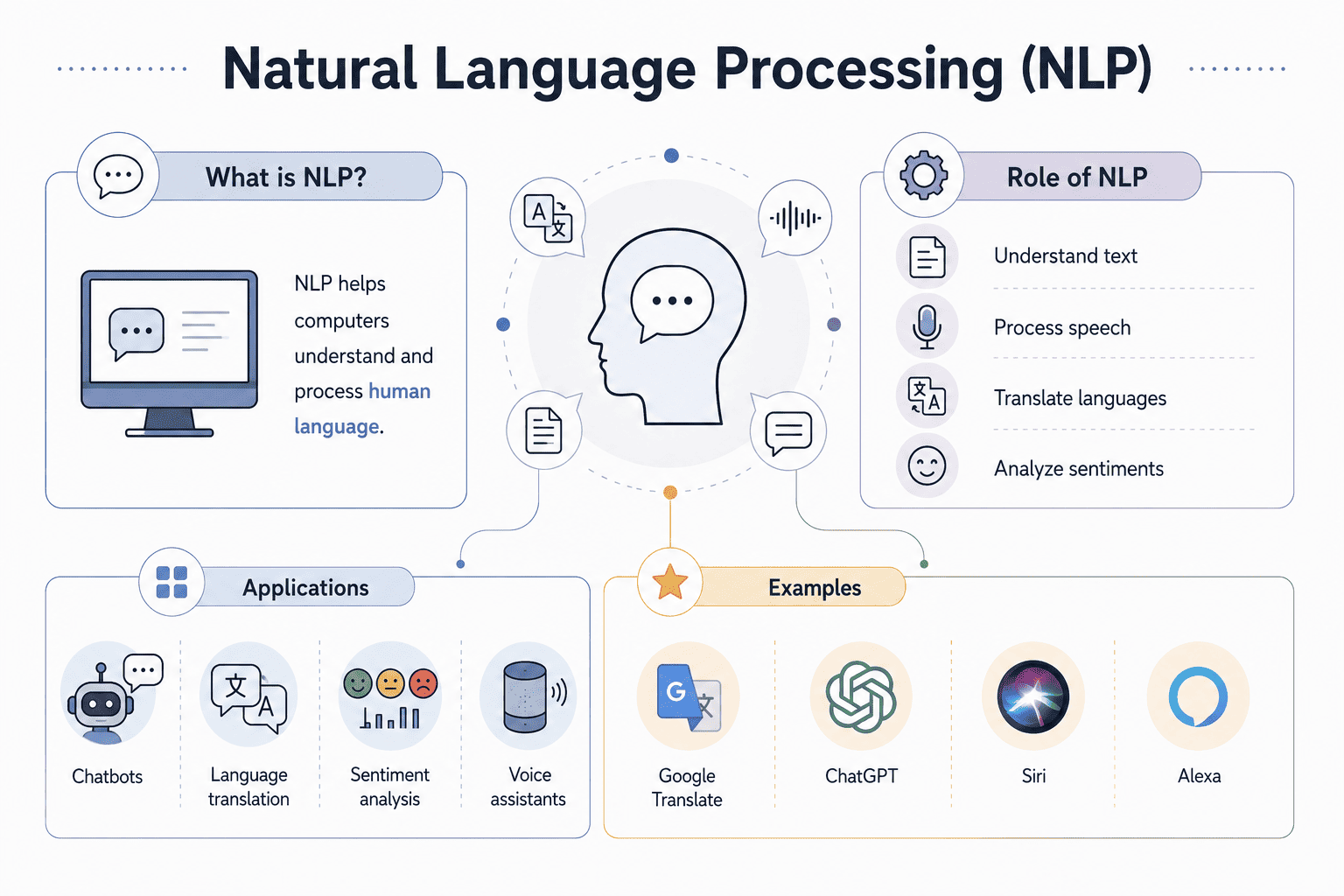
What is Natural Language Processing (NLP)?
Natural Language Processing (NLP) is a branch of Artificial Intelligence that enables computers to understand, interpret, and generate human language.
NLP helps machines communicate with humans using text and speech.
It combines linguistics, machine learning, and deep learning techniques to process language data.
Natural Language Processing (NLP) is a branch of AI that enables computers to understand, process, and generate human language in both text and speech forms.
Roles of NLP
- Understands text to extract meaning from written content.
- Processes speech to recognize and interpret spoken language.
- Translates languages from one language to another automatically.
- Analyzes sentiments to identify emotions and opinions in text.
- Generates text such as replies, summaries, and reports.
- Extracts information from documents, emails, and messages.
Applications of NLP
- Chatbots provide automated conversational support.
- Language translation systems convert text between different languages.
- Sentiment analysis systems analyze customer opinions and feedback.
- Voice assistants understand and respond to voice commands.
- Text summarization systems generate concise summaries of documents.
- Spam detection systems classify unwanted messages and emails.
Examples of NLP
- Google Translate translates text and speech between multiple languages.
- ChatGPT understands and generates human-like text.
- Siri processes voice commands and answers questions.
- Alexa understands spoken requests and performs tasks.
- Email spam filters classify emails as spam or legitimate messages.
6. Computer Vision
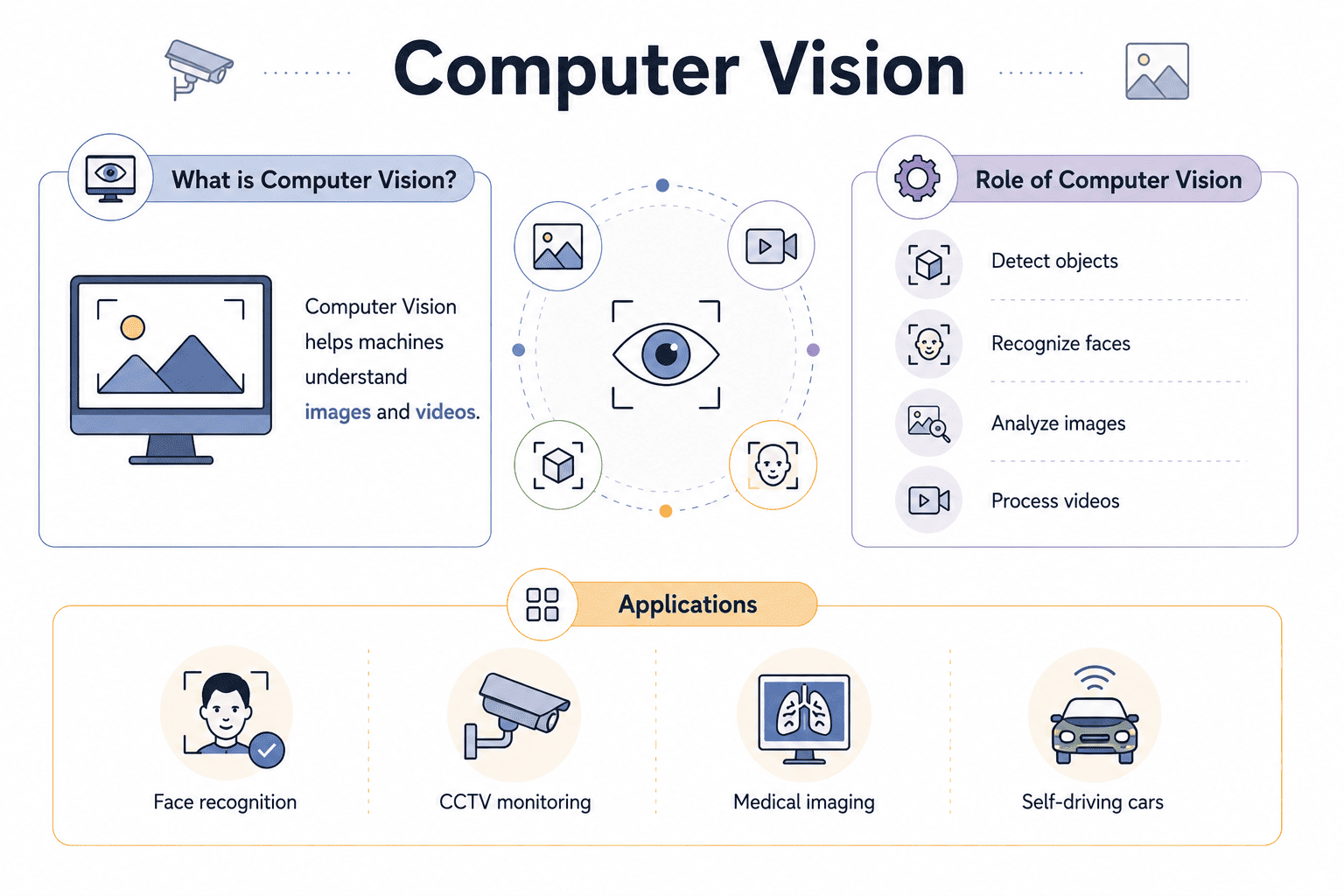
What is Computer Vision?
Computer Vision is a branch of Artificial Intelligence that enables computers to understand and interpret images and videos.
It allows machines to extract meaningful information from visual data.
Computer Vision helps machines see, analyze, and make decisions based on visual content.
Computer Vision is a branch of AI that enables computers to understand, analyze, and interpret images and videos.
Roles of Computer Vision
- Detects objects within images and videos.
- Recognizes faces for identification and verification.
- Analyzes images to extract useful information.
- Processes videos for monitoring and tracking activities.
- Classifies visual data into different categories.
- Identifies patterns in images for decision-making.
Applications of Computer Vision
- Face recognition systems identify and verify individuals.
- CCTV monitoring systems detect and track activities automatically.
- Medical imaging systems assist doctors in analyzing X-rays, CT scans, and MRI images.
- Self-driving cars detect roads, vehicles, pedestrians, and traffic signs.
- Quality inspection systems identify defects in manufactured products.
- Security and surveillance systems monitor environments in real time.
Examples of Computer Vision
- Face unlock systems in smartphones.
- Automatic number plate recognition systems.
- Object detection in self-driving cars.
- Medical image analysis for disease detection.
- Security surveillance cameras with motion detection.
- Barcode and QR code scanners.
7. Robotics
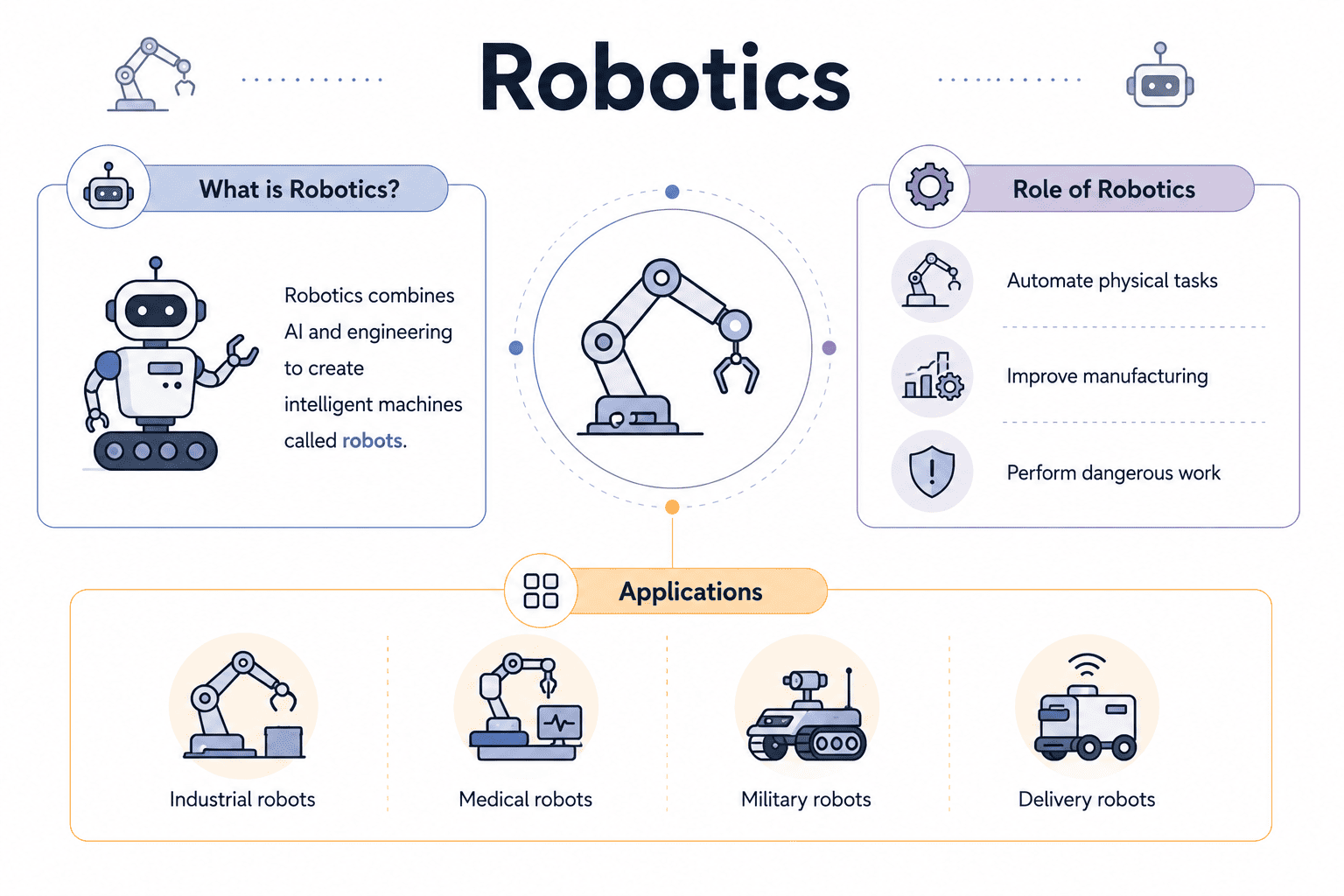
What is Robotics?
Robotics is a field that combines Artificial Intelligence, computer science, and engineering to design and build intelligent machines called robots.
Robots can perform tasks automatically with minimal human intervention.
Robotics aims to create machines that can sense, think, and act in the physical world.
Robotics is a field of technology that designs and develops intelligent robots capable of performing tasks automatically in the physical world.
Roles of Robotics
- Automates physical tasks to improve efficiency and productivity.
- Improves manufacturing processes through precision and consistency.
- Performs dangerous work in hazardous environments.
- Assists humans in completing complex and repetitive tasks.
- Increases accuracy in industrial and medical operations.
Applications of Robotics
- Industrial robots perform assembly, welding, painting, and packaging tasks.
- Medical robots assist surgeons during complex surgical procedures.
- Military robots support surveillance, reconnaissance, and bomb disposal operations.
- Delivery robots transport goods and packages automatically.
- Agricultural robots assist in planting, harvesting, and crop monitoring.
- Service robots help customers in hotels, restaurants, and public facilities.
Examples of Robotics
- Robotic arms used in automobile manufacturing.
- Surgical robots used in hospitals.
- Warehouse robots used for inventory management.
- Delivery robots used for transporting packages.
- Agricultural robots used for crop monitoring.
- Humanoid robots designed for human interaction.
8. Generative AI (Gen AI)
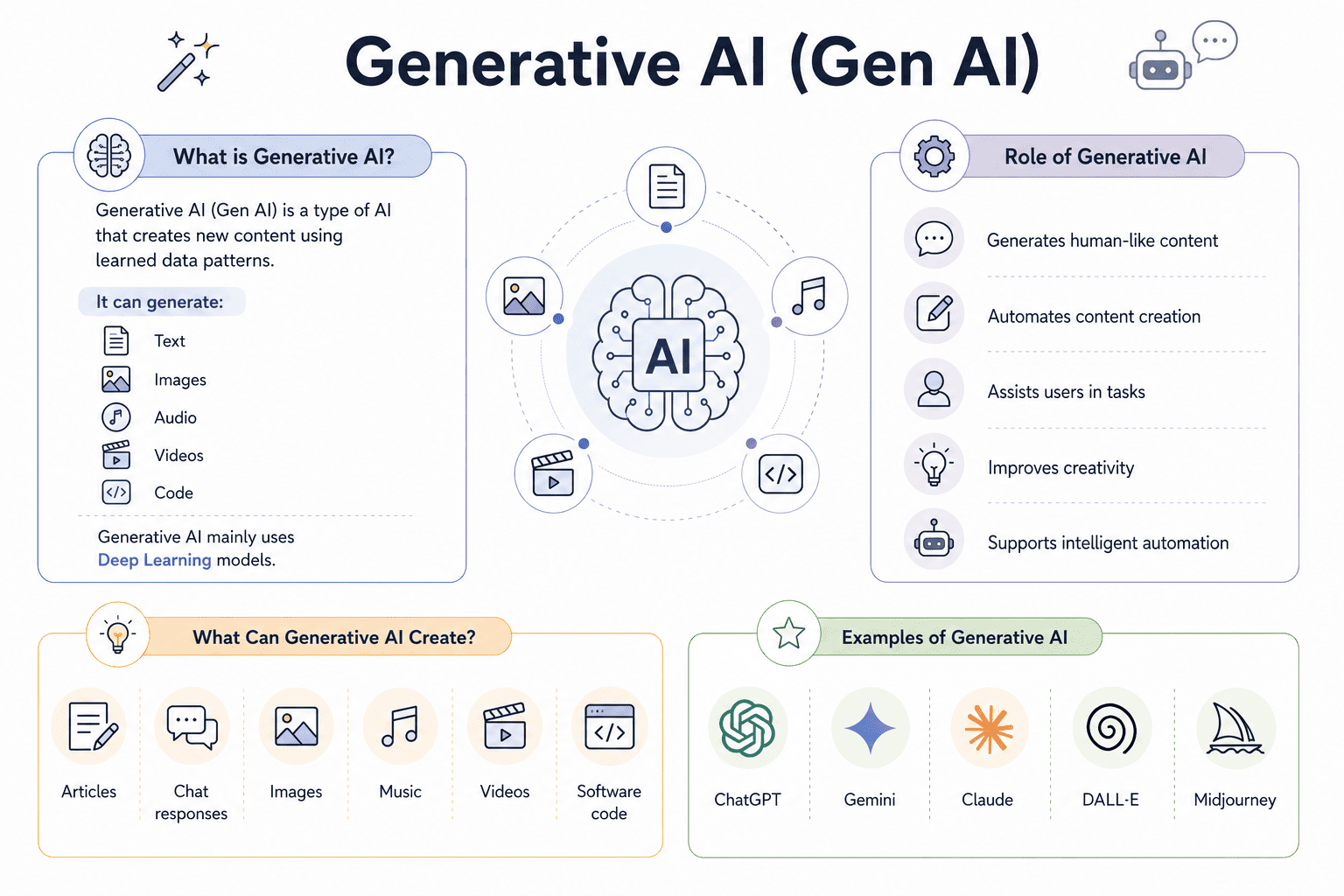
What is Generative AI?
Generative AI (Gen AI) is a type of Artificial Intelligence that creates new content by learning patterns from existing data.
It can generate text, images, audio, videos, and computer code.
Generative AI mainly uses advanced Deep Learning models to produce human-like content.
Generative AI is a type of AI that learns patterns from data and creates new content such as text, images, audio, videos, and code.
Roles of Generative AI
- Generates human-like content such as text, images, and audio.
- Automates content creation to save time and effort.
- Assists users with tasks such as writing, coding, and research.
- Improves creativity by generating new ideas and designs.
- Supports intelligent automation across various industries.
- Enhances productivity by reducing repetitive work.
What Can Generative AI Create?
- Articles and blogs for content creation.
- Chat responses for conversational applications.
- Images and artwork from text descriptions.
- Music and audio for entertainment and media.
- Videos and animations for creative projects.
- Software code for application development.
- Summaries and reports from large documents.
Applications of Generative AI
- Content creation for marketing, education, and media.
- Virtual assistants and chatbots for customer support.
- Image generation for design and advertising.
- Code generation for software development.
- Language translation and text summarization.
- Educational tools for learning and tutoring.
Examples of Generative AI
- ChatGPT generates human-like text, answers questions, and assists with various tasks.
- Gemini generates content and supports reasoning tasks.
- Claude assists with writing, analysis, and problem-solving.
- DALL·E creates images from text descriptions.
- Midjourney generates artistic and realistic images from prompts.
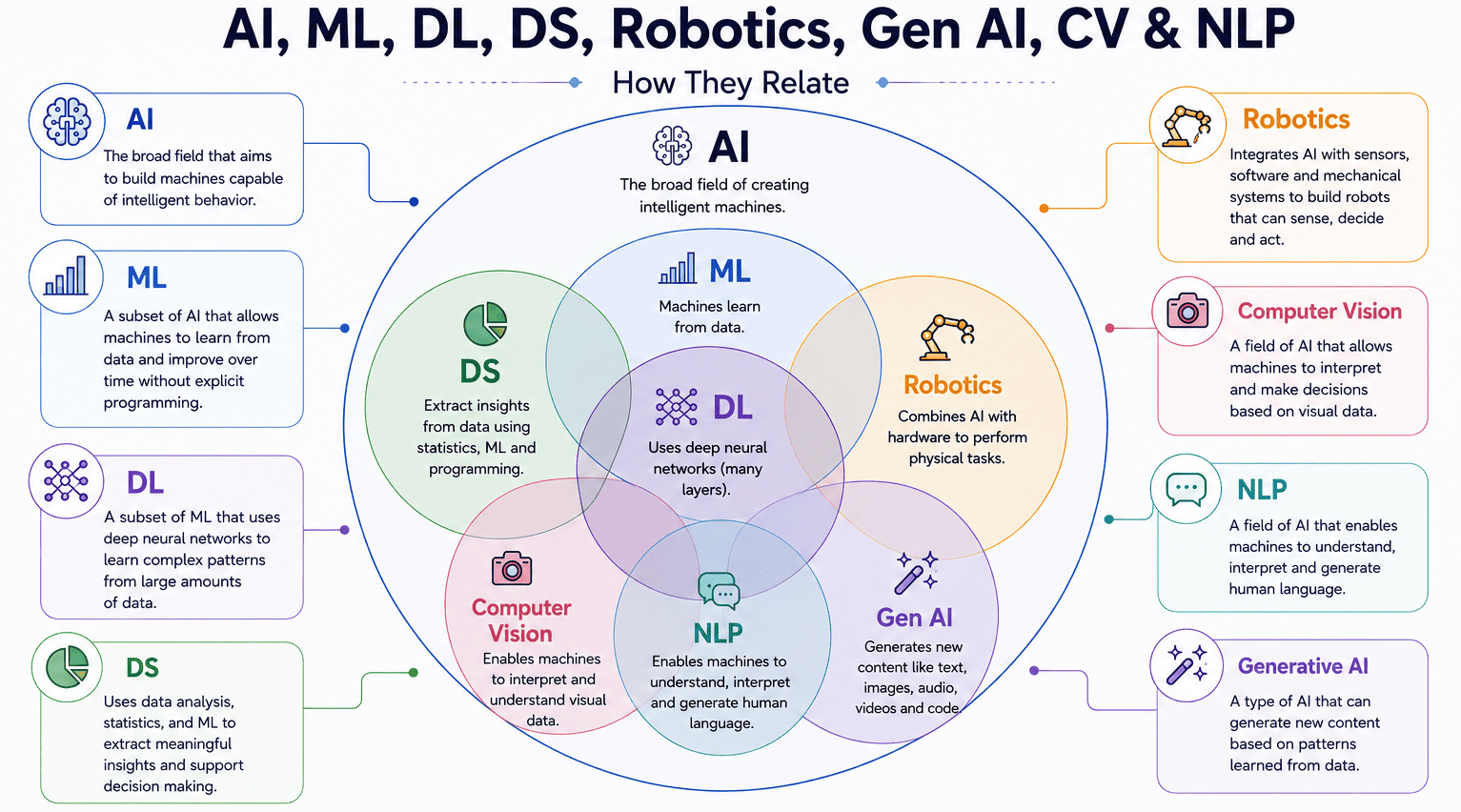
Venn Diagram